Page changed to sample black-history-month
FREE WATERMARKED SAMPLE • 3RD + 5TH + 9TH

Black History Month:
Legacy + Impact

See how the same Week 1 theme changes by grade. Third grade is picture-led and concrete, fifth grade adds source thinking and evidence, and ninth grade moves into mature historical analysis, context, argument, and research.

5th Grade Black History Month illustrated learning scene
CHOOSE A SAMPLE LEVELWatch the same topic mature with the learner.Richer visuals, source thinking, geography, comparison, and evidence-based writing.
Share this 5th Grade sample—not the clean paid packet.Every page and image remains covered by repeated Learn4Legacy sample watermarks.
Free watermarked 5th Grade sample from the 4-week Learn4Legacy pack. The link opens in English.
WEEK 1 • ROOTS, RESISTANCE + FREEDOM • 5TH GRADE

Six visual, coordinated sample pages

The artwork is clearly labeled as educational illustration—not archival photography. The clean member version is generated for the exact grade selected and does not include these public-sample watermarks.

WEEK 1 • START HERE

Freedom Has Always Had Many Voices

PAGE 1 • 5TH GRADE SAMPLE
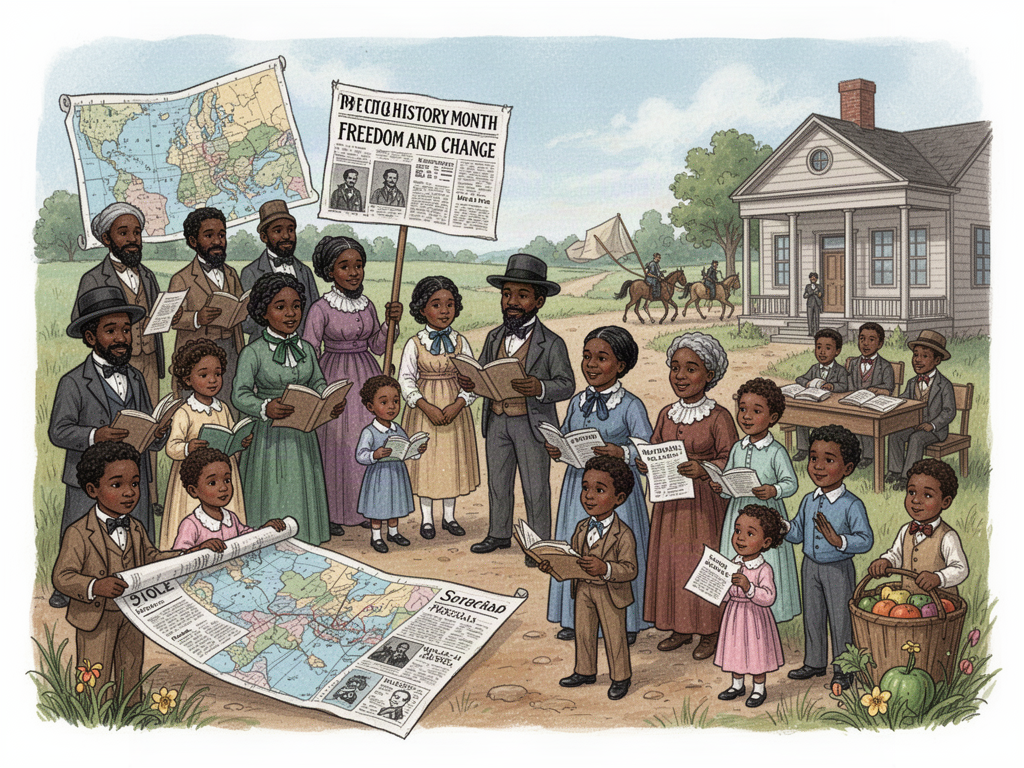
Illustrated Black abolitionists, readers, organizers, families and travelers using maps, newspapers and speeches
ILLUSTRATED LEARNING VISUALStudy the scene for learning, organizing, movement, communication, leadership, and mutual aid.
ESSENTIAL QUESTIONHow did Black people protect freedom, resist oppression, and build pathways toward change?
1NOTICELook for different forms of resistance—not only famous events.
2CONNECTUse people, places, laws, maps, and source clues together.
3EXPLAINSupport your thinking with evidence instead of guessing.
BEFORE YOU BEGIN

Write one thing you already know about resistance or freedom. Then add one question you hope this week answers.
Learn4Legacy™ • Watermarked Public SampleFull 4-week pack: 24 coordinated pages • exact grade selected inside Smart Generator
HISTORY • READING • CIVICS

Resistance Took More Than One Form

PAGE 2 • 5TH GRADE SAMPLE
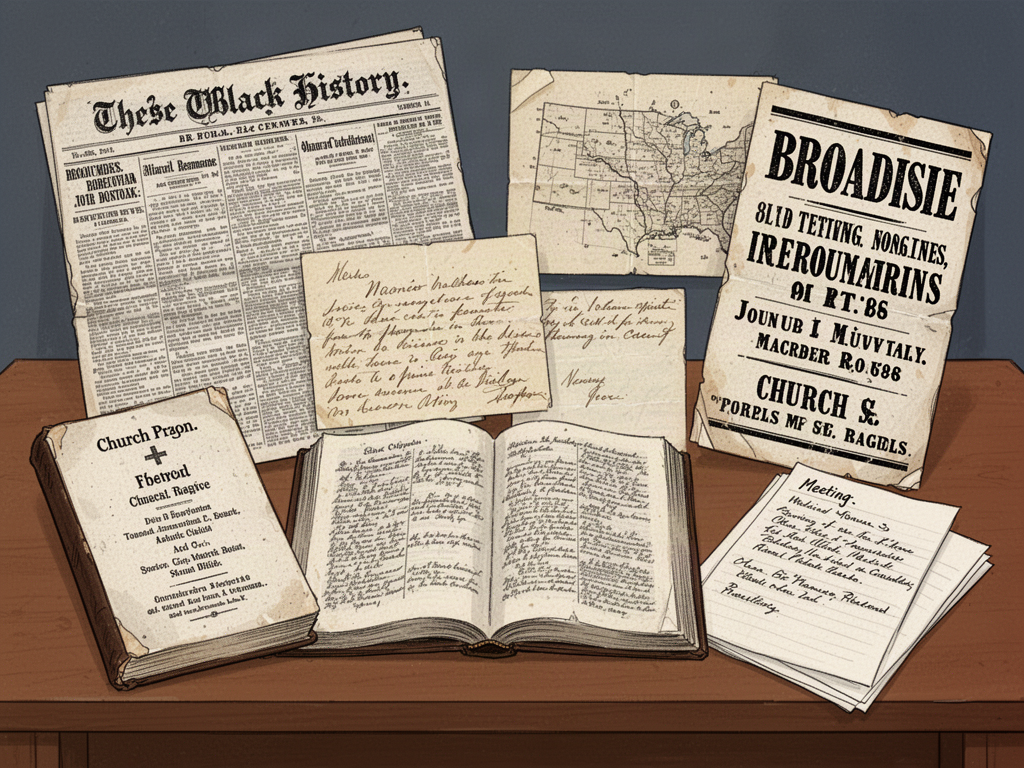
Illustrated source-analysis collage with a letter, newspaper, map, notice, book and meeting notes
ILLUSTRATED LEARNING VISUALA source can help reveal who communicated, what they wanted people to know, and whose viewpoint may still be missing.

Resistance could be public or private, individual or organized. Some actions challenged slavery directly; others protected family, learning, culture, dignity, movement, or future opportunity.

PROTECTFamily + communityPeople worked to maintain family ties, traditions, faith, music, stories, and mutual support.
LEARNKnowledge + literacyReading, writing, teaching, communication, and information could create power and opportunity.
MOVESelf-emancipationSome enslaved people escaped or sought safer territory and free communities.
ORGANIZESpeech + actionBlack abolitionists, churches, newspapers, conventions, mutual-aid groups, and organizers built public pressure.
THINKWhich two forms of resistance could work together? Explain the connection.
Learn4Legacy™ • Watermarked Public SampleFull 4-week pack: 24 coordinated pages • exact grade selected inside Smart Generator
PRIMARY-SOURCE THINKING

Source Detective: Who Made This—and Why?

PAGE 3 • 5TH GRADE SAMPLE
Illustrated nineteenth-century source types arranged for analysis
ILLUSTRATED LEARNING VISUALThese are educational illustrations of source types, not reproductions of a specific archival document.

A primary source comes from the time being studied. It can help us hear a voice from the past—but every source still has a creator, purpose, audience, and point of view.

AUTOBIOGRAPHYA person describing events from their own life.
NEWSPAPERReporting, argument, notices, or public opinion printed for readers.
LAW / NOTICERules or instructions that show what authorities tried to require.
MAPA visual record showing borders, movement, distance, routes, or political control.
  1. 1. Who created the source?
  2. 2. When and where was it made?
  3. 3. What was the creator trying to communicate?
  4. 4. What evidence can you use?
  5. 5. Whose voice might still be missing?
Learn4Legacy™ • Watermarked Public SampleFull 4-week pack: 24 coordinated pages • exact grade selected inside Smart Generator
GEOGRAPHY • HISTORY

Freedom Routes Were Networks, Not Railroad Tracks

PAGE 4 • 5TH GRADE SAMPLE
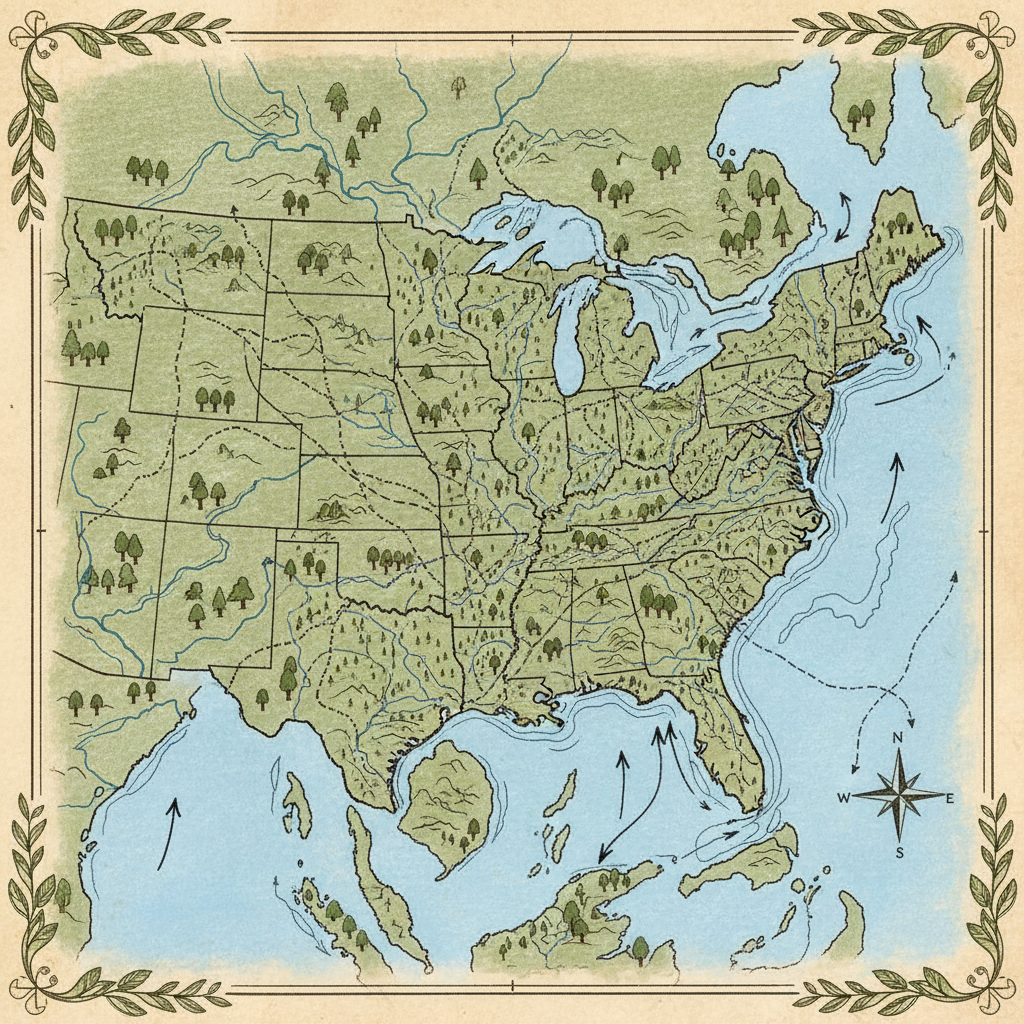
Illustrated map showing multiple possible freedom-seeking routes
ILLUSTRATED LEARNING VISUALUse the visual to think about distance, borders, rivers, roads, laws, risk, and why routes could change.
The Underground Railroad was not one railroad and did not have one route.

It was a changing network of people, information, hiding places, travel routes, and assistance. Freedom seekers made difficult decisions based on geography, law, distance, risk, family, and available help.

STARTING POINTWhere is the person beginning?
GEOGRAPHYRivers, roads, towns, borders, distance
RISKWhich laws or dangers shape the route?
DESTINATIONWhere might greater safety be possible?
MAP ITExplain why geography mattered to movement and why one fixed route would be an inaccurate model.
Learn4Legacy™ • Watermarked Public SampleFull 4-week pack: 24 coordinated pages • exact grade selected inside Smart Generator
BIOGRAPHY • EVIDENCE

Four People, Four Different Kinds of Power

PAGE 5 • 5TH GRADE SAMPLE
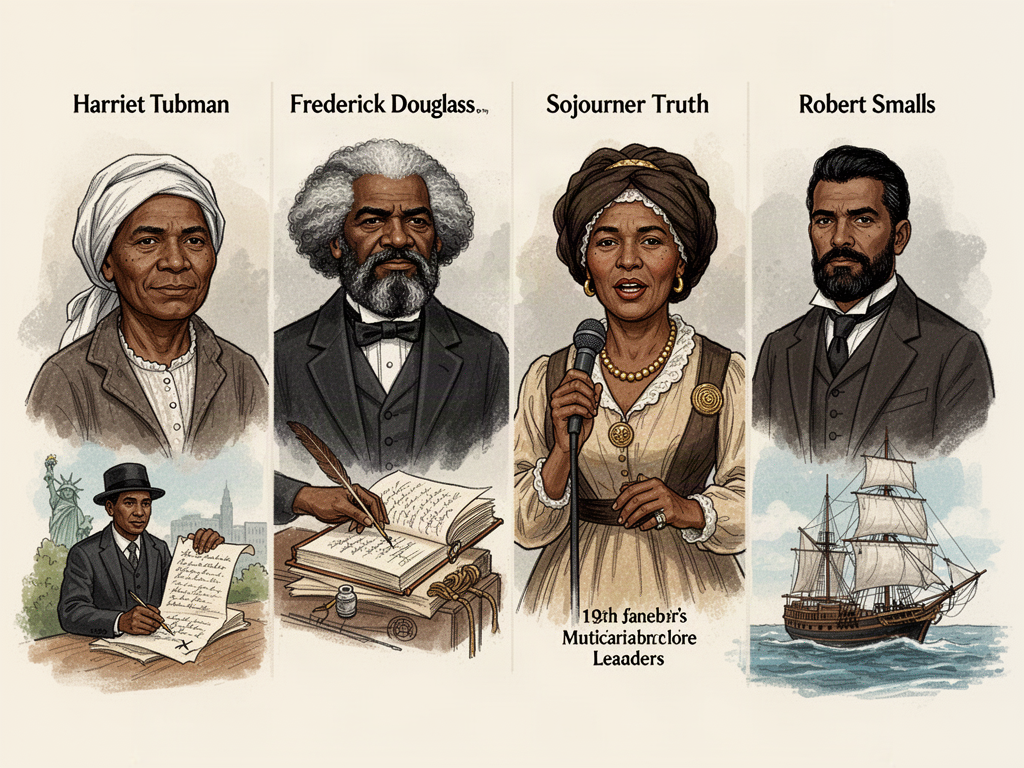
Illustrated collage inspired by Harriet Tubman, Frederick Douglass, Sojourner Truth and Robert Smalls
ILLUSTRATED LEARNING VISUALCompare how leadership can work through direct action, writing, public speaking, strategy, and civic service.
Harriet TubmanEscaped slavery, returned to help others seek freedom, and later served the Union cause during the Civil War.COURAGE + ACTION
Frederick DouglassEscaped slavery and became an influential writer, speaker, newspaper editor, and abolitionist.WORDS + PUBLIC ARGUMENT
Sojourner TruthEscaped slavery in New York and became a public speaker for abolition and women’s rights.SPEECH + ADVOCACY
Robert SmallsFreed himself and others during the Civil War by taking control of a Confederate transport ship, then later served in public office.STRATEGY + LEADERSHIP
COMPAREChoose two people. How were their methods different? What goal did their actions have in common?
Learn4Legacy™ • Watermarked Public SampleFull 4-week pack: 24 coordinated pages • exact grade selected inside Smart Generator
WRITING • LOCAL HISTORY • REFLECTION

Legacy Is What We Carry Forward

PAGE 6 • 5TH GRADE SAMPLE
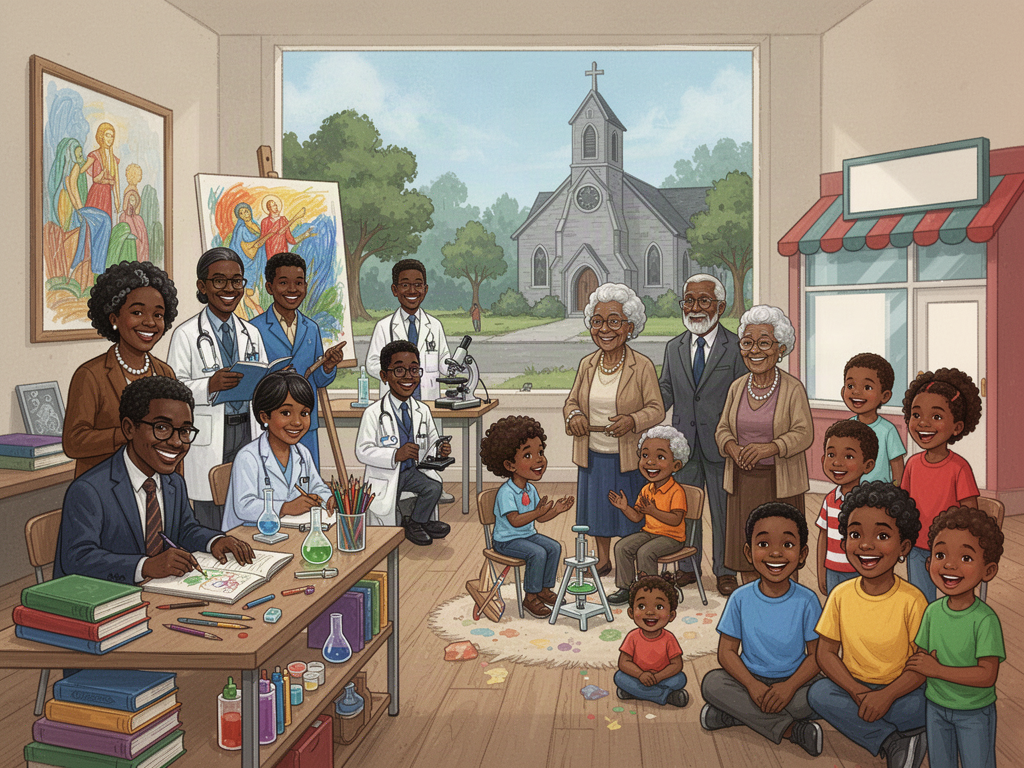
Illustrated Black community across generations including educators, artists, entrepreneurs and organizers
ILLUSTRATED LEARNING VISUALConnect historical resistance and institution-building to the people and places shaping communities now.
EducatorEntrepreneurArtistScientistCommunity OrganizerLocal BusinessChurchStudents + Families
LOOK BACKWhich form of resistance from this week changed your understanding the most?
LOOK LOCALFind one Black leader, institution, business, church, artist, organizer, educator, or historic site connected to your area.
LOOK FORWARDWhat does protecting freedom, opportunity, or community look like in everyday life now?
5-SENTENCE EVIDENCE RESPONSE

Make one claim about how Black Americans resisted oppression or expanded freedom. Use at least two examples from this sample and explain how each supports your claim.

END OF 5TH-GRADE SAMPLEThe full member pack continues through Innovators + Leaders, Arts + Culture, and Local Legacy + Future Impact.
Learn4Legacy™ • Watermarked Public SampleFull 4-week pack: 24 coordinated pages • exact grade selected inside Smart Generator
READY FOR THE CLEAN VERSION?

Build all four weeks for 5th Grade.

Members get four separate weekly packets plus one assembled 24-page set. Pick a different exact grade in Smart Generator anytime.

Build the complete 5th Grade pack